
Uncategorized
Workforce Stability in Times of Healthcare Funding Uncertainty
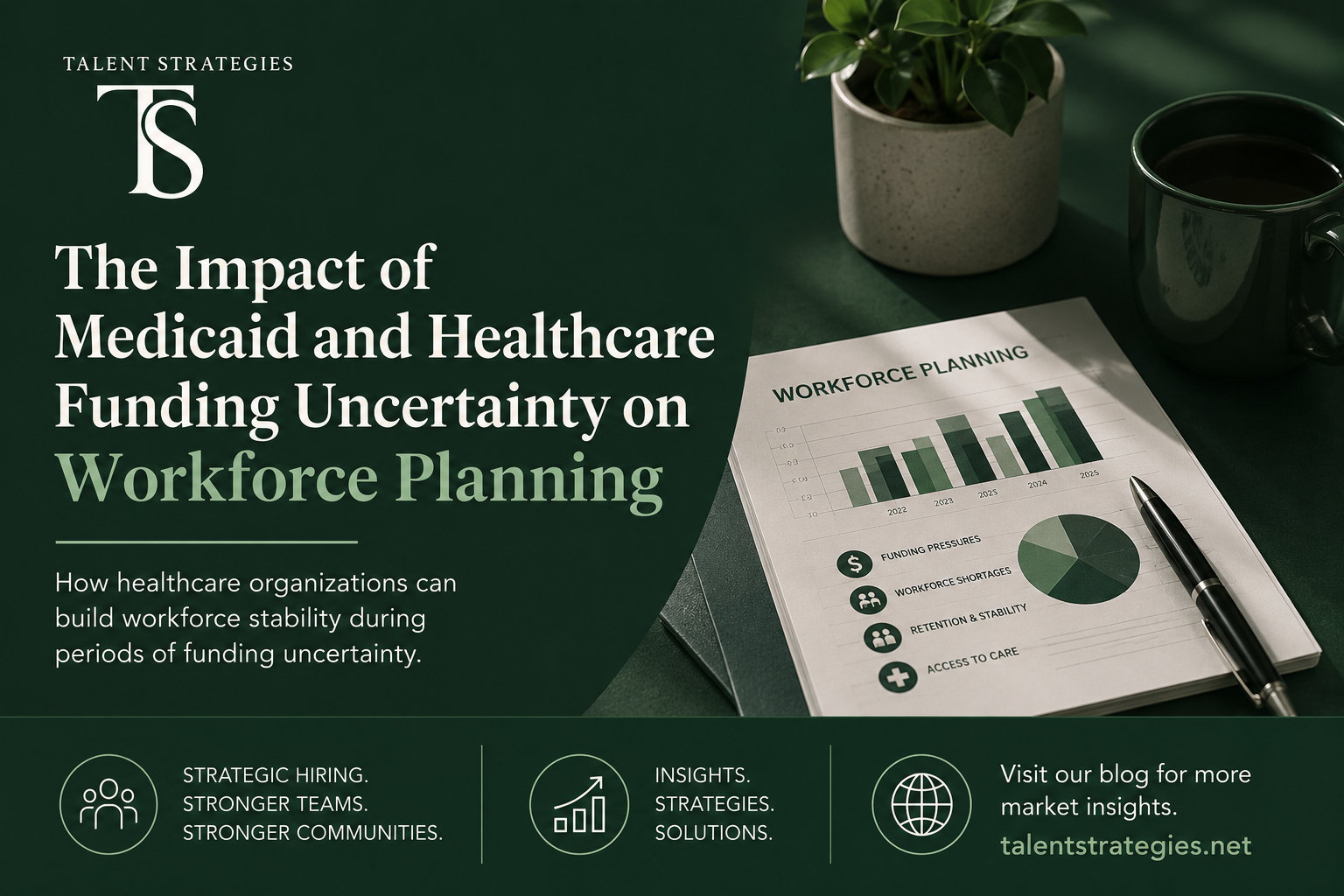
Healthcare leaders are facing a difficult balancing act.
Organizations must continue delivering high quality care while navigating reimbursement pressures, workforce shortages, rising labor costs, and ongoing uncertainty surrounding Medicaid funding and healthcare budgets.
For Community Health Centers, FQHCs, PACE programs, and other mission driven organizations, these challenges are particularly significant because workforce decisions directly impact access to care.
Some important realities healthcare leaders are facing today:
✅ Medicaid covers approximately 1 in 5 Americans and remains a primary source of funding for many community health programs.
✅ Community Health Centers serve more than 32 million patients nationwide, many of whom rely on publicly funded healthcare services.
✅ Workforce shortages continue across nursing, behavioral health, dental, and other critical healthcare roles.
During periods of uncertainty, it can be tempting to focus solely on immediate staffing needs. However, the organizations that remain strongest are often those that continue investing in workforce planning, retention, and long term hiring strategies.
Workforce stability is not just about filling vacancies.
It is about:
🔹 Retaining top performers
🔹 Building leadership pipelines
🔹 Reducing turnover costs
🔹 Strengthening organizational culture
🔹 Creating continuity of care for patients
At Talent Strategies, we believe recruitment should be part of a broader workforce strategy. The goal is not simply to fill an opening, but to help organizations build resilient teams that can adapt and thrive regardless of market conditions.
As healthcare organizations continue to navigate funding uncertainty, what workforce strategy has had the greatest impact on retaining and supporting your teams?